Moving to Study and Live Abroad: Why I Chose Europe for My Masters Degree
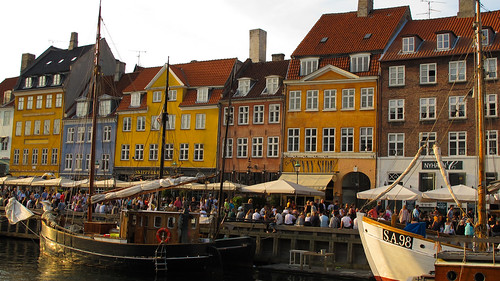
If everything goes according to plan with my Visa and class registration I’ll be starting my two year Masters in Communication and Cognition at the University of Copenhagen in just under a Month. Eager to get settled and begin the culture shock process I jumped the Atlantic and came over a bit early. So far I’ve got two weeks as a Danish resident under my belt and am starting to get my bearings.
While worlds apart I’ve found that the Danes and Arizonans have at least one thing in common. When I tell them I’ve chosen to re-locate to Copenhagen I always get a quizzical look and the question, “Why Denmark?”. Most follow the question up with “Why the University of Copenhagen?”, especially when they find out I passed up on an invitation from Georgetown in Washington D.C. to attend.
A lot of factors went into my decision making process and I’ll try and share some of them with you in this post in the hope that they help those of you facing similar decisions and perhaps offer insights into the process for everyone else.
The Application Process
In applying for Graduate programs I knew I didn’t need to return to Grad School. I had a good job, a great resume, decent job security, and a network that allowed me the luxury of turning down several jobs over the course of the recession. Simply put, I missed the academic environment and felt that there was significant potential to improve my social circle, resume, and future prospects with a return to academia. Especially one that would allow me to work on my existing passions and projects while getting extra credit for them. I studied lazily for a week for the GRE, took it and operated on the assumption that my resume and body of work would be far more valuable than test scores. I also knew that the difference between a PhD and a Masters was significant, both in cost and weight so I decided to split my energy between the two.
To select the Schools I’d apply for I made a list of schools that I felt had a very respectable reputation and then pulled up several University lists and rankings. With these lists in hand I made my way through them making note of the Universities which were in a location I’d be willing to move to and which ranked in the top 50-75 world wide. From there I researched the University’s list of programs and looked for schools with a Communication oriented program or something that would allow me to study social media, virtual worlds, and online education. It is important to note that the one consideration I didn’t take into account was my chances of getting accepted. I didn’t need to go back, and so as a result the $75 application fee and $15 transcript fee was a small cost to pay for an application and the chance to explore my curiosity.
I was surprised that several of the schools I was most interested in (Harvard, Cambridge) didn’t have any programs remotely connected to the area I wanted to study. On the opposite end of the spectrum others (Columbia, Edinburgh) had programs focused in my area, but which were taught exclusively online. Something I wasn’t interested in despite that being one of my central areas of research. I wanted to improve online courses, not struggle through existing ones.
I also felt that it was important that I not fight the language barrier any more than I had to. So, I focused on researching Universities that had English based programs or were based in English speaking countries. I was surprised at just how many Universities world wide offer courses and programs in English. They’re out there, the trick is finding them.
After doing my research (which took much longer than I expected), I ended up with a list of 8 Universities. Of those I found 4 PhD programs and 4 Masters programs to apply to. I targeted faculty in the programs I was interested in and sent out a barrage of e-mails asking questions and introducing myself.
Though unorthodox I felt it was worth the effort to apply directly to a few PhD programs as they offered better financial support and would have provided an accelerated program. Of the 8 Schools I applied to the 4 PhDs were Stanford, Cornell, University of Pennsylvania and University of Washington. The 4 Masters I applied to were Georgetown, University of Copenhagen, Oxford, and a joint program between University of Southern California and the London School of Economics. Key elements in my application were strong statements of purpose and letters of recommendation, my undergraduate participation in Arizona State’s Barrett, The Honors College w/ Honors Thesis, my professional research and expertise, and my GRE scores which were mediocre with a 530 Math, 590 Verbal and a 5 on the Essay portion.
To make things more challenging I later learned that I had applied during one of, if not the hardest application cycles in the last 50 years. Ultimately, I received compelling invitations from Georgetown and University of Copenhagen. Both offered cities and experiences completely different from Arizona, storied histories, and excellent reputations. However, where Georgetown was only able to offer student loans and $30,000 a year in tuition fees University of Copenhagen offered a complete tuition waiver. After additional research I also learned that Copenhagen ranked 40th/45th on the lists of Global Universities which was significantly higher than Georgetown. Additionally, the University is a member of the International Alliance of Research Universities which consists of 10 of the world’s leading academic institutions: Cambridge, Oxford, Yale, Australian National University, Berkley, Peking University, National University of Singapore, University of Tokyo, ETH Zurich.
This is when it became real. I wasn’t just enjoying fanciful dreams of applying at the major universities around the world. I was faced with a very compelling opportunity to actually live those dreams and see them brought to reality. Frankly, it was absolutely terrifying. That may shock some of you, as a veteran traveler and repeat solo traveler, but the prospect of a trip is vastly different than the prospect of 2 years in a foreign education system, in a alien country. Even the age of the University was mind boggling. University of Copenhagen was founded in 1479 – keep in mind that Columbus didn’t even sail until 1492.
I wasn’t sure if I had the balls to do it. Then I thought through how much I regretted never spending a semester or year abroad during my undergrad, about how incredible the opportunity laid out before me was, and how fear aside it was something I truly wanted to do. I fired off my letter of acceptance and began researching just what exactly I had signed up for.
The Role of Location and Culture
I moved to Arizona from Colorado when I was six. I spent the next 18 years of my life in various parts of the state where I lived in Sedona, Prescott, Tempe and Scottsdale. During that time I spent an additional two years on the road. The first was in place of 5th grade and was a year spent home schooled and backpacking with my parents through Europe. The second was in place of 7th grade and a year spent RVing and home schooled through the US.
The one thing all that time in Arizona taught me was that Arizona and I aren’t kindred spirits. The state has some incredible people, world class natural beauty and a bucket of potential. Unfortunately, it is also dominated by a world view and behavioral culture which is 180 degrees from me. The state as a whole is anti-education, anti-intellectualism, anti-entrepreneurship, anti-humanism, anti-multiculturalism and the embodiment of what happens when you have 30 years of the GOP party line in action. As someone who takes a strong humanistic approach to life, values education, curiosity and intellectual pursuits, isn’t religious, values science and history, has a global world view, relishes different cultures and fiscal responsibility Arizona left me miserable. Outside of my group of friends I found myself surrounded by people who actively embraced and relished in waging war on everything I view as important and essential for progress, sound governance, and a healthy population.
Similarly, Arizona has absolutely zero long-term plan for economic development. The State has been bleeding all of their top talent for years due to dreadful policies and their short sighted approach to business and education. The job prospects and opportunities for people 25-45 in the state are nearly non-existent beyond the basic service industries or a job with Intel, and the chances of that changing any time soon in the current environment are non-existent.
So, when it came time to relocate for my Masters I knew I wanted a destination that would provide a community and culture that valued long-term thinking, that took a humanistic approach to life, which had significant potential for professional development and networking, as well as an area that put heavy emphasis on cultural and educational development.
With these criteria in mind the Scandinavian countries immediately jumped to the top of the list. You’ve probably heard that Denmark (and Scandinavia at large) are some of the happiest countries in the world. That’s with good reason. They’ve spent the last 30 years investing heavily in education, infrastructure, health care and innovation while embracing a humanistic approach to governance and policy. To a person they are some of the best educated, friendly, helpful and least religious people in the world.
During my 18 day trip to Scandinavia in July of 2010 I was absolutely floored by how helpful, friendly, and genuine the Norwegians and Danes I met were. Their willingness to have a conversation, answer questions, and to look out for each other was refreshing. As was the ease I found when seeking out stimulating conversations that were based in well educated, global perspective and insight. In the three days I spent in Copenhagen during that trip I fell in love with the city and developed an incredible respect for the Danish people. That feeling and experience has only been magnified over the past two weeks as I’ve gotten settled and worked to navigate the city.
The city itself is a perfect reflection of its people. With beautiful ancient architecture the city is clean, well laid out, has a great public transportation system, is lined with canals that nearly rival Amsterdam, and is one of the greatest biking cities I’ve ever experienced. Some 36% of the population commutes to work by bicycle every day. Despite being an ancient city, efforts have been taken to clean up the harbor and river system and the water in the inner harbor is so clean it is safe for swimming. The coast is decorated by massive wind turbines, and the general feeling is one of an ancient city that is retaining its spirit and essence while charging into the future.
A Global Network
Ultimately one of the biggest resources in life is your social and professional network. It is what drives a successful career, business venture, and makes for a rich and informative personal network. I developed an incredible network of friends, peers, and professional contacts during my time in Arizona many of whom have since re-located further diversifying the information they can share and the insights they are able to offer. But, I knew that to truly live the life I want to live I need a network of friends and professional contacts who are truly global and as diverse as the places they were born, educated and raised. I knew that that by relocating either abroad or to one of the coasts that I’d be exposed to a completely different mixture of people to share, collaborate, relax, learn from and explore with.
The opportunity to live, study, and socialize abroad offers me an chance to develop an entirely new network from the ground up, while maintaining the existing networks I cherish. It provides me the opportunity to radically re-structure the aspects of society I engage with regularly, as well as the cultures, nationalities, and professional backgrounds of my peer group all in a way which wouldn’t have been possible if I stayed in the same region and the same communities I’ve spent the last 20 years in.
So, Why Denmark?
Obviously, there isn’t a simple answer. We’ll see how I feel about the decision as I start my classes and start to integrate into the local culture and truly see it as a local instead of just a visitor. That said, it’s amazing to be surrounded by wonderful people who truly seem to understand the importance of charting a path forward, of looking toward the horizon and of embracing new information and relishing it, not trying to quash or discredit it. I’ll tell you one thing, it sure is nice being surrounded by people who don’t live their lives believing the earth is 6,000 years old and that corporations will always have their best interests at heart.
I’ll be continuing to write on the experiences, revelations, and lessons learned during this adventure so stay tuned. Also, if you’ve got a question you’ve always wondered about or a challenge in your own process don’t hesitate to reach out.
Interested in doing more research? Consider browsing Amazon’s assorted titles on Denmark




I hope you have a nice experience in Denmark.
I had an entirely different experience there. Came back.
Thanks! A negative experience? That’s a bummer. How long were you here and what for? From your info, it looks like you’re from India?
I was also a masters student at Copenhagen University. But I ran into all sorts of problems, accommodation, immigration, social acceptance (it takes ages for the Danes to open up) and the likes. I have traveled before to other western countries so Denmark was a surprise. By the end of my course I was pretty sure that I was not going to stay there any longer.
To each his own.
Wish you all the best ! Hope you enjoy the sights and sounds. Will follow your updates.
That’s a shame to hear! I’m still waiting to actually get my visa accepted but so far my communication with them has been good, if a little relaxed for my taste. I’ve got a Danish friend of a friend putting me up for this month, so that is making finding accommodation a lot easier, but their dorm system is definitely not set up in a positive fashion for international students. I’m an avid Salsa Dancer and love Entrepreneur clubs, so I’m hoping those two clubs help jump the social barrier. Also, I’ve always found that women are the key to breaking into any social circle. Both spending time with them makes you more acceptable to other guys, and they tend to be more social and welcoming in general. Will definitely keep you and the other readers up to do!
How did you manage a complete tuition waiver for the University of Copenhagen? I had been looking into it as an aspiring Masters student, but it seemed to me that international students were all required to pay full tuition rates.
When applying there was an option to write an essay with two additional letters of recommendation for the government sponsored scholarship. I selected it and wrote the essay though I didn’t really expect it to go anywhere. They changed the scholarship from full tuition waiver+living stipend, to full tuition waiver only, but then also increased the number of scholarships they handed out by a decent margin.
If I hadn’t tuition fees were about $11,000 a year, if I remember right. Still a lot cheaper than what I was looking at elsewhere in the US, and not much more than in State had I stayed at Arizona State.
That’s interesting to hear, though the gap in cost is certainly far wider if you’re from the U.S. Canadian tuition (where I live) is closer to $5,000 a year for domestic students. Would you have any links for this government-sponsored scholarship?
I don’t Edwin, but it was part of the normal application and I think the specifics change from year to year and program to program. It was noted in the application literature attached to the app and an included part of it. I believe one of the factors in the application was that you had to apply as you applied for general admission and couldn’t apply for it seperately/after..
Congrats! I bet you end up having a great time there, not only in your study program, but also traveling around Europe in your free time. I am slightly jealous!
Thanks Michael, that’s definitely the plan! Hoping to have a manageable course load and 3 or 4 day weekends to make the most of!
All the best in Copenhagen. I’m sure you’ll do well there.
Thanks Jeff!
Great write up. As a holder of an MA from ASU and a current teacher at MCC here in AZ, I totally agree with you on the state of this state today. The destruction that has been wrought upon the academic and educational system is disgusting, and is one of the big reasons I am activly looking for a PhD program now, and only at schools that are NOT located in Arizona. I have been honestly only considering Harvard due to my area of research and a specific expert in residence there, ’till now. My net will be cast much further after reading this. I’ve never considered international schools (and it may be difficult to find within my area), but hell, if you can do it, why can’t I 😉
I hear ya Joe, it’s a real shame because I was really happy with my experience at ASU and think it’s definitely one of the shining beacons in the state. However, there’s so much more than just the academic institution involved in the process and a good learning environment. Good luck with Harvard and the other opportunities, I’m sure it’ll lead to great things and exciting adventures!
HOW exciting, alex! not too many people take this chance, and yet, as you’ve outlined, it changes lives. bravo! can’t wait to follow along on your journeys. 🙂
Thanks! It’s definitely something I really had to push myself to do. A thousand and one excuses and reasons to serve as excuses, but ultimately I’m so, so glad i pushed through them and did it. Loving it so far!
Really enjoyed this article. It can be hard to find more nuanced descriptions of the process of applying to an international school and so it can come across as a scary mystery to many Americans. I think this article could help relieve some of those fears and make the whole thing seem more accessible. Also enjoyed hearing the personal background and reasons for coming to the decision you did. Nicely done!
Hi Alex!
I really enjoyed readying this post, especially around why you chose Denmark. Your reasons were exactly the same as mine.
A childhood in Ohio (very similar to Arizona in terms of the cultural and socio-economic factors your mentioned) left me with such a wanderlust that I just had to get away. I ended up moving to the east coast, and eventually studied abroad in Denmark for a summer at the Copenhagen Business School. It was an amazing experience.
In addition to the openness, appreciation for intellectualism, multiculturalism, etc. I also liked the Scandinavian approach to life – enjoy it to the fullest, and appreciate even the littlest things – like a sunny day. I’ve been in love and inspired every since. In fact, I’m headed that way this summer. It’s been too long!
Thanks for sharing your story and for all of the updates on Twitter.
Best,
Cristy
Fantastic to hear! Let me know when you’re on town. I’m always happy to connect for a beer with readers!
I’m definitely enjoying every aspect of the experience, making sure to pause and enjoy the small things along the way!
I’m in Florida and it’s like the conditions you described with the difference that the education system is long gone and getting exponentially more expensive every semester. I study computer science and engineering and do work in the area as well (websites, networks, phones, etc.).
I’d really like to study either a bachelor’s or master’s in a Nordic country (mainly Norway, Denmark, or Iceland) in engineering or computer science. I heard that it’s more likely to find an English-speaking program for master’s (more international). I’d like to graduate and get a job in that country without having to fly home first and go back and forth for every job interview while waiting for a work visa.
Is it possible in high-demand areas like mine, to get around some of the usual immigration rules after finishing school or is it one-size-fits-all? Just trying to get an idea of my chances of making this happen and if it’s practical.
Honestly, I’m not really sure. Do you already have a Bachelors? Or you’d look at getting a Bachelors, with the possibility of extending with a Masters? I believe Norway in particular has a high demand for certain types of skilled labor, though you’d have to research your field specifically. Some careers are more conducive than others to finding a job and work visa. It sounds like you’re in one of the fields that they’re always looking to add new employees in. There are definitely a lot of classes taught in English across the Scandinavian countries. Once here and working on the degree, it would all come down to how hard you looked and how pro-active you are.
Thanks for the reply. I’m a junior and will get a BS in a few semesters. Do you think it’s a better idea to get the BS in Norway/Denmark or finish here then apply for a master’s or for work over there? Are the master’s programs in English at your school or are the bachelor’s programs more in English? It seems like immigration into a Nordic nation is extremely difficult. Do you think that companies there are looking for locals or for cheaper labor from other countries? How do you think Americans rate in competing for a job there? Are they looked down on or is it favorable compared to others?
It seems like you have to leave Denmark to get a work visa before being allowed back in — not sure if you’ve had to deal with that or if that matters after you’ve been to school there. Anything you can add would be helpful.
Well, you have to start the application process for a masters about 10 months in advance, so it makes the most sense to finish your BA then apply to a mixture of MA programs and then to see which ones offer financial aid/tuition waivers. You might also explore doing a semester abroad as part of your bachelors and then if you like it following up with a masters post-graduation.
Honestly, I have no clue how many teach Bachelors classes in English as I’ve never looked. I think there are a fair number available but cannot speak to how many. The Scandinavians in general tend to be fantastic about speaking English and everyone under 40 is almost completely fluent.
Immigration is challenging, but still far easier than the US. I think it has less to do with cheaper labor and more to do with skills and education. The biggest challenge for Americans seeking jobs here is the language barrier. However, there are a ton of expats working in Nordic countries that still have not mastered the language and many of the jobs – especially in your sector are English centric. Also, the general perception among American students/Americans in general that a US degree is viewed as inferior to a European one is false. The only University System in Europe that comes close to competing with the US is the UK’s.
The student visa is a half work/half standard visa. I can work 15 hours a week during the school year, 37 during the summer. It is automatic and part of my student visa. Now, I’m not sure what happens at the end of that visa, but I imagine that I can transition it over to a professional visa when the time comes. Worst case scenario, I’ll take a $70 flight outside of the Schnagen zone and back in.
Of course policies and demand will differ from country to country and I really only know first hand about Denmark.
I’m graduating from ASU this december and I am also looking into studying in Denmark for my master’s degree. I don’t know if this is too personal, but what was your GPA coming from ASU? I’m only asking because the university I’m looking into said they give out tuition waivers to exceptional students, and I just want to have a comparison. Also, without the tuition waiver, were you able to fund yourself?
Hi Gina! Thanks for reading and not at all! Happy to share. I got a tuition waiver as part of the application/government scholarship offered by the University of Copenhagen. Sounds like it might be the same/a similar program?
My GPA was a 3.38, but that was also offset by the fact that I graduated from Barrett. I also had 3.5 years of work experience that weighed heavily in my favor contrary to the fact that my GPA, while decent, was not as high as I might have liked. Hope that helps a bit! If you have more questions, feel free to shoot me an e-mail. As far as funding myself, the unfortunate thing is that University of Copenhagen (and some of the others) are not FASFA certified due to a bureaucratic issue that’s been ongoing over the last few years. That means that, unless something changed this year, you wont qualify for any FASFA aid and will have to find student aid other ways. I ended up relying on family support and the tuition waiver/scholarship so I can’t speak to how successful pursuing other lines of funding might be.
Hi Alex,
That article was a really nice read, good work!
I am also looking into applying to different master programmes in Copenhagen, Communication and Cognition being one of them. Seeing as you wrote this article a little while back, could you maybe give some feedback on how you liked it? I’d also be interested in what you are now doing with it. “Improve online courses”? That sounds like it’s also got to do with usability? Are you still working in that area? Sorry for all the questions 😀
Best regards, Ina
Hi Ina,
Thanks for reading! I’ll send you an e-mail directly to the address you used when posting this comment. My thesis actually ended up focusing on social media and the backpacker community. You can see a copy of it here: virtualwayfarer.com/AlexBergerBackpackerThesis.pdf.
Hi!
I am currently an MA student studying cognition and communication at KU (in my last semester). It was interesting to see your blog. I’m really enjoying Denmark but am feeling a bit lost in sense of what jobs are available to us at the end of our studies- what can I do to find experience when all jobs ask for years of experience. Do you have any tips for internships or positions that are suitable for this MA? I have a BA in Communication Studies from the University of California, Santa Barbara.
Look forward to hearing from you! Thanks!
Hi Sara,
Congrats on being in the home stretch. Happy to chat with you about the process, experience, job search and what I’ve learned. For that conversation though I’d prefer to have it 1 on 1. If you’re in the Com Cog FB group you can find my information and message me directly. Alternatively, feel free to shoot me an e-mail.
Hello Alex,
I really enjoyed reading your article and I am very happy that you are enjoying yourself in Denmark. I wanted to introduce myself to you and possibly get your opinion on a dilemma I am having. My name is Steven I am a fellow Arizona native and Arizona State alumni as well. I just graduated from ASU in December with a B.S. in Business Management and a B.S. in Supply Chain Management and I am now thinking about obtaining my Msc in Supply Chain Management from a University in Europe or the UK. I spent last summer working in London and absolutely fell in love with the experience. My main intention for obtaining an Msc overseas is to land a full-time job in either of the above locations for a few years. From my research the possibility to obtain a work visa for non-EU or UK citizens looks very bleak. However, I have not been able to find a definitive answer from anyone in regards to the job prospects and visa acceptance rate for people who obtain their Msc abroad. Any help you could give me would be greatly appreciated as I feel very overwhelmed with the lack of information that exists.
Congrats on finishing up at ASU! The job market isn’t a fun one, and it definitely complicates things as non-EUs. I highly recommend pursuing the MA abroad, but make sure you pick a country in which you want to work after. Keep in mind that beyond the things you’ll learn during the program, you’ll also be working hard at developing a new network which will then translate into job opportunities. It varies widely from country to country and based on your skill set. For Denmark, there is a 3 year green card for job-seekers who are highly skilled. This means that if you hit 100 points and apply, you’re almost guaranteed a 3 year exploratory visa that then lets you work in DK. In cases like mine where I came over for the MA at a leading Danish University, I had ample points for the green card app. On the other hand, I have been less active when it comes to looking for positions in the rest of Europe (UK in particular) in part because the visa consideration is a huge headache and added complication. Another thing to take into consideration is that while many Americans stop at a BA, in Europe it is much more common to get an MA (they’re often cheap/free for Europeans). This means that it isn’t the added boon it would be when you return to the US with it. To start out with check out http://studyindenmark.dk and you can look at DK as an example. From there you can expand that search to other European Universities and countries. The challenge with the UK with that their Universities are extremely expensive and have very little financial aid available.
Hello Alex! Your article was really inspirational. I myself have been accepted for an MA in English Studies at KU. Have you heard anything about the program or know of any students currently in that program? Also, how long did it take you for your Visa papers to be sent to you? I understood that first they have to fill out their part and send it to you, and then you proceed with your part. I am also American and was just curious as to how long the whole process takes. Your insight would be very helpful! Thanks!
Congratulations on getting into the program and beyond that on being on the cusp of a wonderful adventure! I had a few friends who were in various incarnations of the English program at KU and they enjoyed it. It is a very different system and environment from what you’re used to in the US, so be prepared but don’t be overly concerned. As long as you pay attention to the logistics of what you need to do for the programs here, they’re quite easy from a workload perspective compared to what we’re familiar with in the US. For the visa, things have improved a lot over the last three years. But, yes, the University will fill out the basic paperwork, which you’ll then complete and return. At which point you’ll need to keep a very close eye on, and pester immigration services fairly regularly. They have a tendency to be highly inefficient and incompetent. That being said, they’ve also made HUGE improvements in processing times and accessibility. It was a huge mess for me, and took about 4 months due to two screwups, bad information, and general incompetence. Luckily I was able to come over on my US tourist visa while I worked it all out and started the semester. As long as you keep the pressure on them though, and given the new changes it shouldn’t be something to worry about. You can also find me on Facebook for more specific questions about Denmark and the process. I’m happy to help.
I fell in love with Northern Europe over some recent travels, and am now looking to do my master’s in Amsterdam (I’m a Canadian), as it’s the only place on the continent where I can study my field. (May not be Nordic, but at least it’s a short flight away.) This was really reassuring to read – people really CAN take such a big step and uproot everything to study abroad. Thanks for the read!
Best of luck with it Rachael! Amsterdam is a gorgeous city, and one I often consider if I ever end up staying in Europe but re-locating from Copenhagen. Enjoy the adventure! It is 100% worth it.
Hi,
I have a BS from ASU and want to study in Europe mainly because tuition is usually free or way much more inexpensive than the States.
My question is, if I obtain my Masters from a EU nation, and return to the US for work, would employers give me a hard time in obtaining employment as I would return back with a European Masters degree? I’ve read that a US masters degree is superior than a EU masters degree. What’s your best advice for me? Hope to hear back from you! Thanks! – Sam
It is far more common for students in parts of Europe to continue on for a Master’s in no small part because of the cost difference and while time away from the US system has given me a new level of respect for it there are still quite a few excellent European Universities. There tends to be the belief among some American students that American Universities are the only “credible” Universities in the world, which, if you sit and have a hard-think about it makes absolutely no sense what-so-ever. Keep in mind that a MA from Cambridge, Oxford, the London School of Economics, etc. will trump all but the most well-respected Universities in the US. The trick is identifying which Universities are top tier Universities globally and then making your decision from there. It also all depends on your employer and if they view the completion of an international program abroad as a huge advantage and indication of increased resiliency, cultural awareness, and drive – or if they’re one of the few employers that is US-centric. At the end of the day a degree from the right European University is as good, if not better than a degree from the majority of American Universities. This is because in addition to comparable academic standards you’re also getting a robust set of life experiences, network, and the perspective that comes with it. I cannot over-stress just how profoundly transformational 1-2 years spent abroad is.
I’m envious of you, Alex. I have a few friends from Denmark and they are all great! My point is that there is no way for a place to be bad, if people living there are cool. Good luck to you. Hope you like it there.
Hi Alex
This blog and reading about your experience of doing masters in a foreign country is a motivation.
I am at a similar juncture in life. I am 29, married and have five years of experience. Both of us(me and my wife) have jobs with good salaries. I have an admit to a dual degree in Master in Data Science, with full scholarship. The universities TU/e Netherlands(entry) and KTH, Sweden(exit) \.
I am struggling in taking the final decision. I have always wanted to work and live in Europe and specially Scandinavia, though I am worried about the job scene and salaries(low) in Sweden.
It will be a great help if you can comment on the job scene in Sweden and nearby countries and the reputation of the universities(TU/e and KTH) in Europe.
Thanks
Thanks Akash! Love to hear that and definitely fuels part of why I write. I really don’t know much about what things are like in Sweden. It’s 2x the size of Copenhagen and also has a robust economy, beyond that? It really depends a lot on you, and your individual industry. It’s best to ask people with a similar profile, job seekers, and people recently hired (possibly use linkedin) as they’ll offer better guidance.
Was there any way you were able to assess your chances of getting into the University of Copenhagen program when you applied?
I wish I could say there was, unfortunately there was not =(
Few years ago when I was choosing where to study for my Masters Degree, Denmark came as the perfect opportunity for me. I needed a change, so moving to Europe was fine. I got Masters Degree in Textile Design at Designskolen Kolding then decided to stay in Denmark. I found a job connected to my degree and few months later I moved to Germany to live and work. I officially moved to Europe and I would say studying in Denmark was my best choice.
Copenhagen is amazing city! I am going to study there. I am so glad that I found your article! Their culture is different but you are going to adapt fast. Greetings!
Couldn’t have asked for anything better today!
Thanks for this amazing article. The insights helped me sort out a lot. Made notes and shall be using the tips right away! 🙂
Great to hear!
Hi there! Thanks for sharing your story. It always helps to hear other people’s experiences 🙂 I have been looking into getting my electrical engineering degree at DTU. I have been wanting to live in Denmark for quite some time. I was wondering if you knew anything about how competitive DTU is to get into? I currently go to Sonoma State University in CA and will be graduating next spring. My GPA is a 3.8 and am at the top of my program. I only have a few projects under my belt but no major research or publications. I am lacking in research (my favorite part of school!) because I have to work IT at an engineering company 40 hours a week to pay my bills. I am going to apply regardless but don’t want to get my hopes too high! It’s very hard to find any admission statistics online.
Hi Lindsey, make sure to check out my Denmark 101 video series on YouTube as well! Thanks for reading =)
DTU is an excellent program. It IS very competitive, but no more so than many American schools, and you have the added bonus of coming from the US and having a strong academic background to start with. It all depends on the program you’re applying for, but the international programs office at DTU is fantastic. I got to know a few of the people there during my job search after I graduated and actually considered working there. Also, the Danish professors are VERY friendly, so research the programs that interest you and then reach out to them to learn more about it. You won’t find a lot of admissions numbers and the Danes don’t generally work in the same way we do in the US. It’ll be important to convey your holistic approach to studying, your interest in the field, and why you want to come to study in Denmark as well as what you feel you can contribute. Good luck!
Hi Alex! I’ve been thinking about applying to KU for one of their master’s programs and find your post very inspiring and motivating. 🙂 Do you know much about their IT and Cognition program? Would love to hear more about your experiences with the school and city via email (was going to reach out to you directly via email but couldn’t find it on the site)!
Hi Jess, you bet, happy to chat about the programs. I hear good things about the IT and Cognition Program. Danish Masters are a bit different than others in the US and elsewhere, so consider researching that a bit. Email is on the contact/PR page =)
Hello Alex. Interesting post. I was trying to find out more information about Masters in Cognition and Communication in University of Copenhagen and your article popped up. I have a Bachelors Degree in Mass Communication and 5 years work experience in promoting literacy amongst children and young adults. I would like to learn more about this Masters and if it is the best choice for my interest and future pursuit.
Please can we have a 1 on 1 chat? Thank you.
I am applying to University of Copenhagen and also Georgetown for thier MPS in Disaster management, similar to you! Hoping I get into U.Copenhagen without too many hoops
Two great schools for sure! Good luck and check out my Denmark 101 videos and podcast if you end up coming to Copenhagen =)
Hi Alex. I found your blog last year while researching schools and really enjoyed reading about your experiences and the advice you had for others. UCPH actually became my top choice and I have recently been accepted into a master’s program. However, there is one online course that makes the program ineligible for US federal loans. I have been searching for a private lender that works with UCPH, but so far, have turned up nothing. Are you aware of any alternative lenders that another US student has used to fund studies at the University of Copenhagen? Thanks!
Hi Tara, thanks for the comment and coming back! Congrats on acceptance! That’s quite the bummer on the FASFA etc. issues. They’ve been talking about “fixing” that since I was applying. I’m afraid I don’t have any good advice as I was lucky enough to be able to rely on the good ol’ bank of Mom and Dad for my loan. Not sure if GoAbroad or a similar site might have some guides for that? I’d be quite careful about rates and such though as you go and plan pro-actively for increases in the next 5 years.
Hello Mr.Alex, I have done with degree program and would want to pursue my masters program at university of Copenhagen with a GPA of 2.4 at the University of Cape Ghana. will be possible
That would depend entirely on the program you were interested in, your academic profile, what that 2.4 equates to, and various other factors none of which I can provide insight on. I suggest reaching out directly to the universities and their enrollment advisors for more info =)
I really like what you wrote here… I have NO idea why it’s taken me so long to find this lol. I’m ashamed haha. Really appreciate all your help so far in my journey, I know it takes time and energy for the replies.